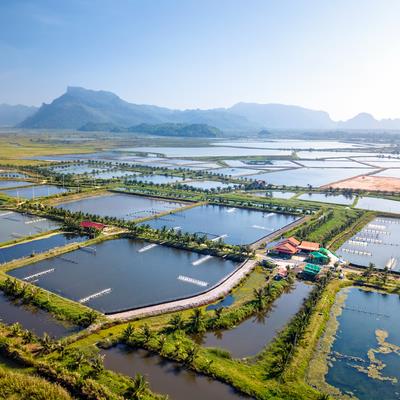
Fontiers are bringing key researchers together in a focused project on 'Pesticides in Aquaculture: Unraveling Ecological Impacts and Regulatory Challenges'. Here's a link to find out more about the project https://www.frontiersin.org/researchtopic/75204.
About this Research Topic
This Research Topic will be hosted in Frontiers in Environmental Science with the support of Chief Editor Dr. Angela Helen Arthington from Freshwater Science.
Impact Factor: 3.7
Cite Score: 7.0
Submission deadlines:
Manuscript Summary Submission Deadline 28 February 2026
Manuscript Submission Deadline 30 June 2026
This Research Topic is currently accepting articles.
Background
Aquaculture is one of the fastest-growing food production sectors worldwide, yet its rapid expansion has intensified the reliance on chemical inputs, particularly pesticides and antibiotics, to manage parasites and improve yields. This Research Topic addresses the pressing issue of pesticide usage in aquaculture and their effects on freshwater ecosystems. Focusing on various pesticides (e.g., sumithion, neonicotinoid, emamectin benzoate, deltamethrin, prometryn, atrazine, etc.), this Topic aims to unravel their impacts on water quality, plankton, periphyton, and benthic invertebrate populations. Through experimental analysis, modelling, and literature review, the Research Topic will highlight current debates around the ecological consequences of pesticide usage and their regulation in aquaculture. This Topic is crucial for developing management strategies that balance aquaculture productivity with environmental sustainability, aligning with global efforts to mitigate anthropogenic stressors on aquatic life.
The scope of this Topic includes investigations into how pesticides alter water quality parameters, disrupt primary (e.g., algae), and secondary productivity (e.g., plankton and benthic invertebrate assemblages), and influence broader food web dynamics in aquaculture systems. Special attention is given to the cascading ecological effects that may compromise biodiversity, ecosystem services, and ultimately the resilience of aquatic habitats. We encourage contributions that employ laboratory- and field-based experiments, literature review, and modeling approaches to assess pesticide impacts, as well as interdisciplinary perspectives that bridge ecological science, environmental policy, and aquaculture management. Beyond ecological implications, this Topic also aims to engage with the ongoing debates surrounding pesticide regulation, highlighting gaps in current legislation, inconsistencies across national and international frameworks, and challenges in enforcing sustainable practices.
Highlights of this Research Topic include, but are not limited to, the following points focused on:
● Ecotoxicological pathways by which pesticides affect aquatic organisms;
● Ecosystem impacts of pesticide use on primary productivity, lower trophic organisms, trophic interactions, biodiversity, and ecosystem functioning;
● Effects on water quality dynamics around aquaculture areas;
● Comparative approach across diverse aquaculture environments (ponds, raceways, indoor recirculation system, net pens, cages) and geographic contexts;
● Regulatory frameworks, national and international pesticide regulations, their enforcement, and implications for aquaculture sustainability;
● Socio-economic perspectives of the trade-offs between aquaculture productivity, food security, and environmental protection, including stakeholder perceptions and policy adoption; and
● Management strategies including innovative practices, mitigation measures, and integrated pest management approaches to minimize ecological risks while supporting aquaculture development.
Frontiers is a publisher created by scientists for scientists. We created Research Topics to give emerging research communities a platform. They bring together leading researchers to accelerate the development of cutting-edge research themes. As an open access publisher, Frontiers applies article publishing charges (APCs) to make research freely open and available for all.